
Small Multifamily Management
Duplex to 50 units, managed at 5.9% average. AI-driven leasing, vacancy under 3.5%, and rent in your bank in 1-2 days. Half of what legacy firms charge, twice the technology.

The Sweet Spot Nobody Serves Well
6 units. 12 units. 18 units. Too many to self-manage between your day job and your weekends. But not enough doors for a national multifamily firm to assign you a real team. You become a checkbox in someone's quarterly review, charged 8–10% to be ignored.
Our software does the heavy lifting that would otherwise require three coordinators per 100 doors: AI-screened applicants, automated rent collection, weekly RentVelocity™ re-pricing, and PropertyGuardian™ maintenance triage. We pass those efficiency savings to you as 5.9%, about half the industry standard , and still deliver an institutional-grade operating statement.
How the model works →Multifamily-Specific Services
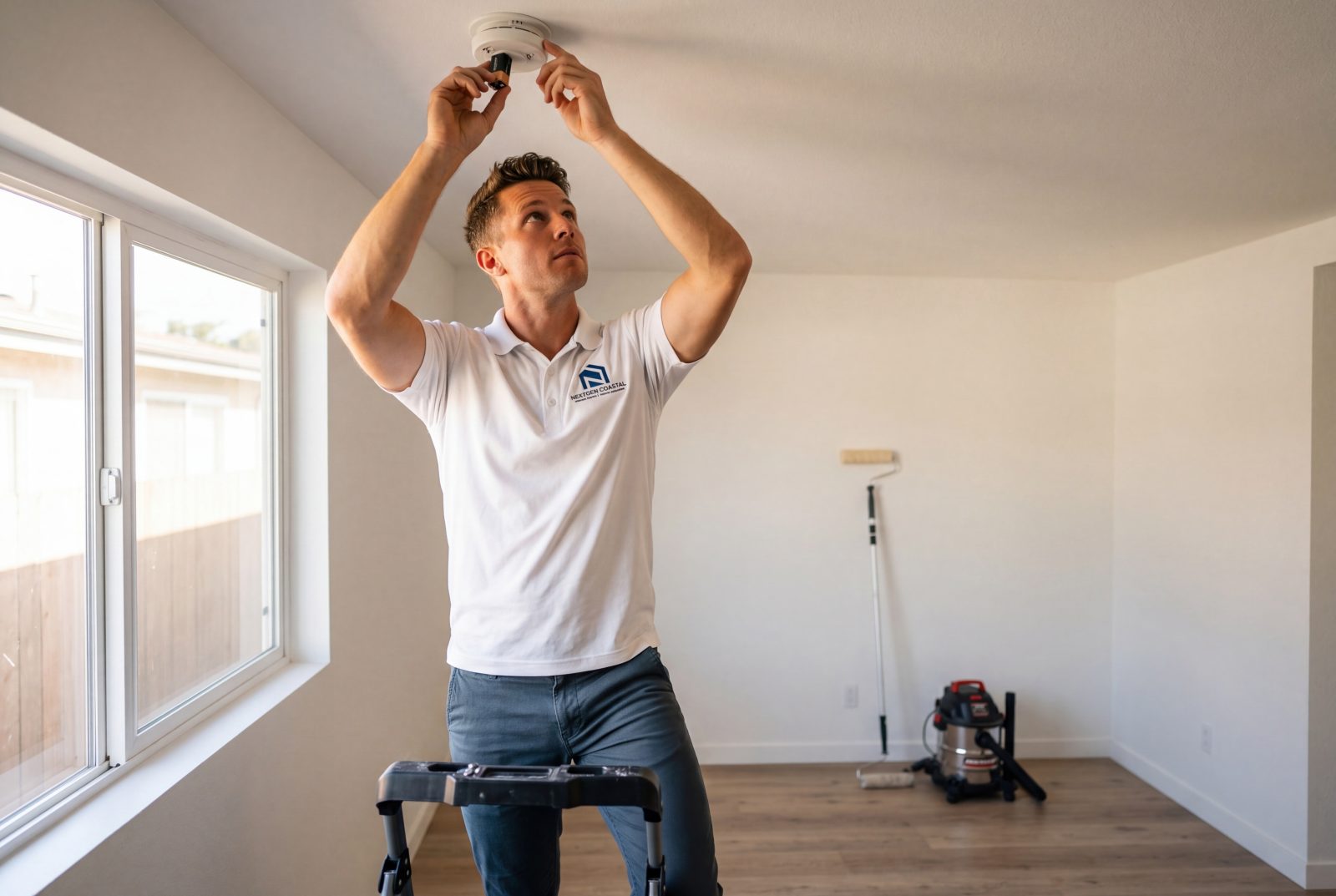
Multi-unit means turnover is constant. We run a 24-hour standard SLA on cosmetic turns: paint touch-up, deep clean, smoke-detector battery, keys re-cut, listing photos re-shot. Vacancy stops compounding the day a tenant moves out.
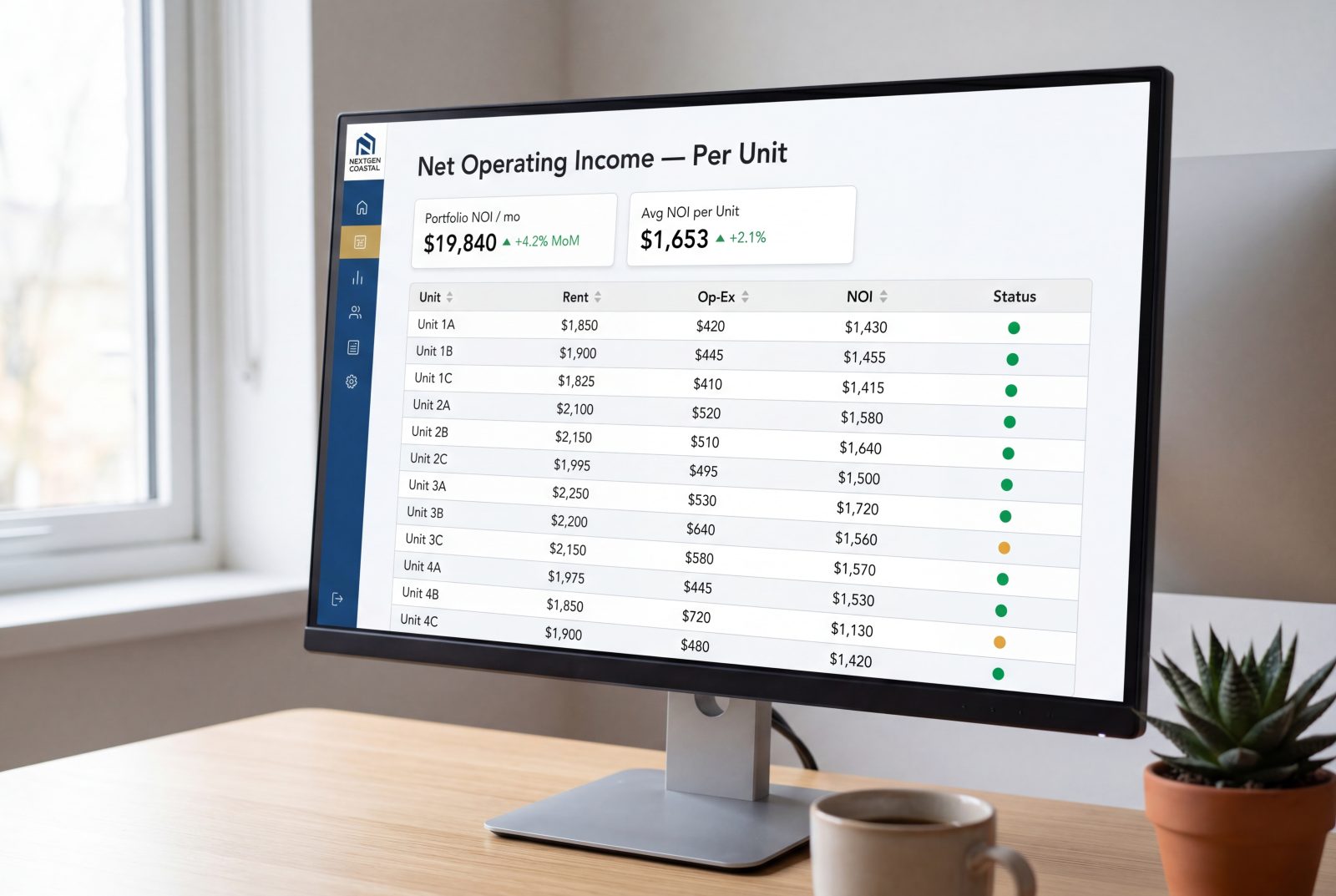
Building-level numbers hide the problem unit. Our owner dashboard shows P&L per door, week over week, rent, opex, occupancy, NOI, so you spot the unit that's been costing you money before it shows up in the year-end Schedule E.
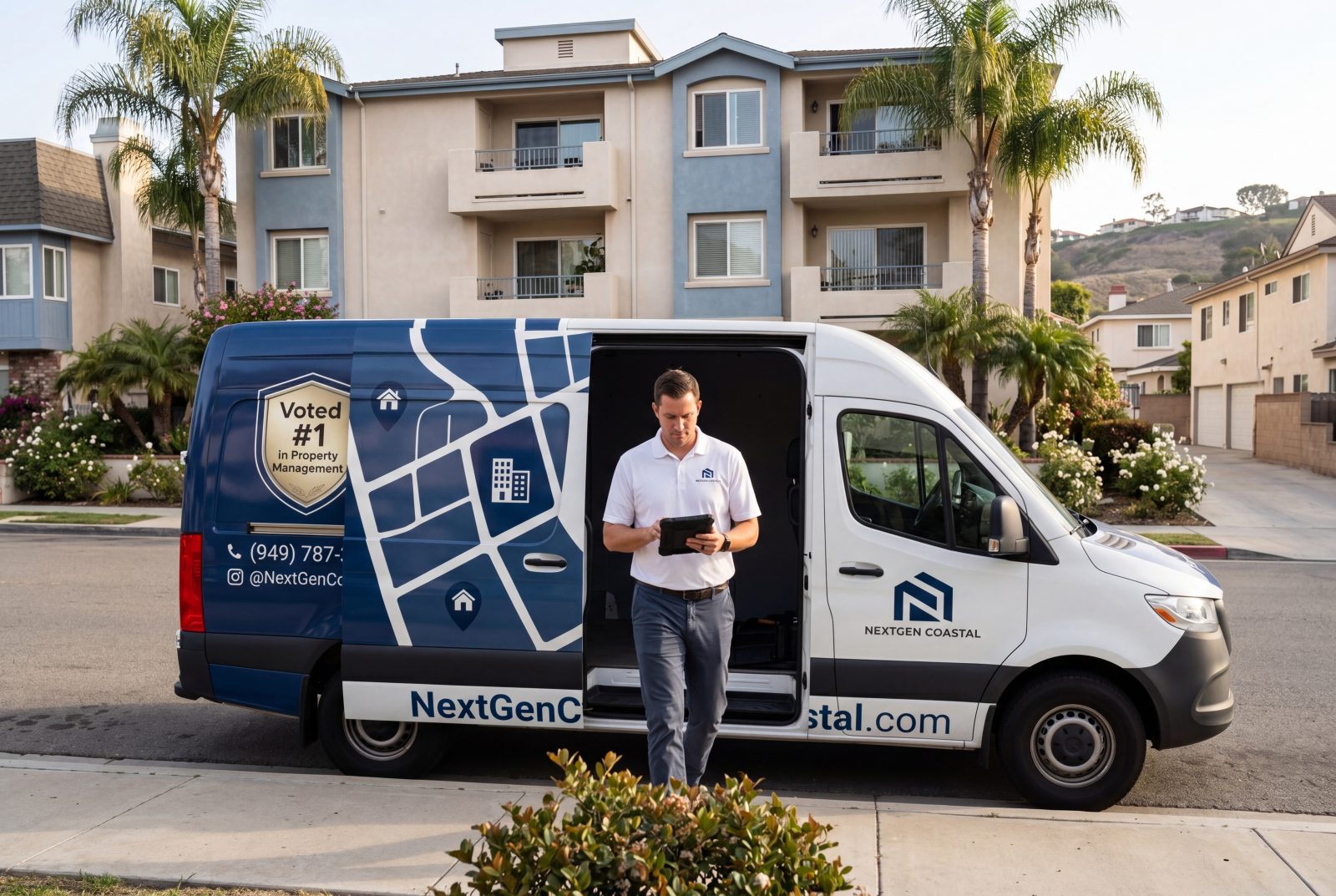
Quarterly building walkthroughs. Hallway, breezeway, common-area, mechanical-room photos timestamped to the inspection. A deferred-maintenance backlog with vendor bids attached, not a drive-by, not a "looks fine" email.

Painters, plumbers, HVAC, locksmiths, appliance repair, all vetted, COI on file, on a pre-negotiated rate sheet. We dispatch under your spending limit, bid above it. Zero markup on invoices, zero trip-charge fees.
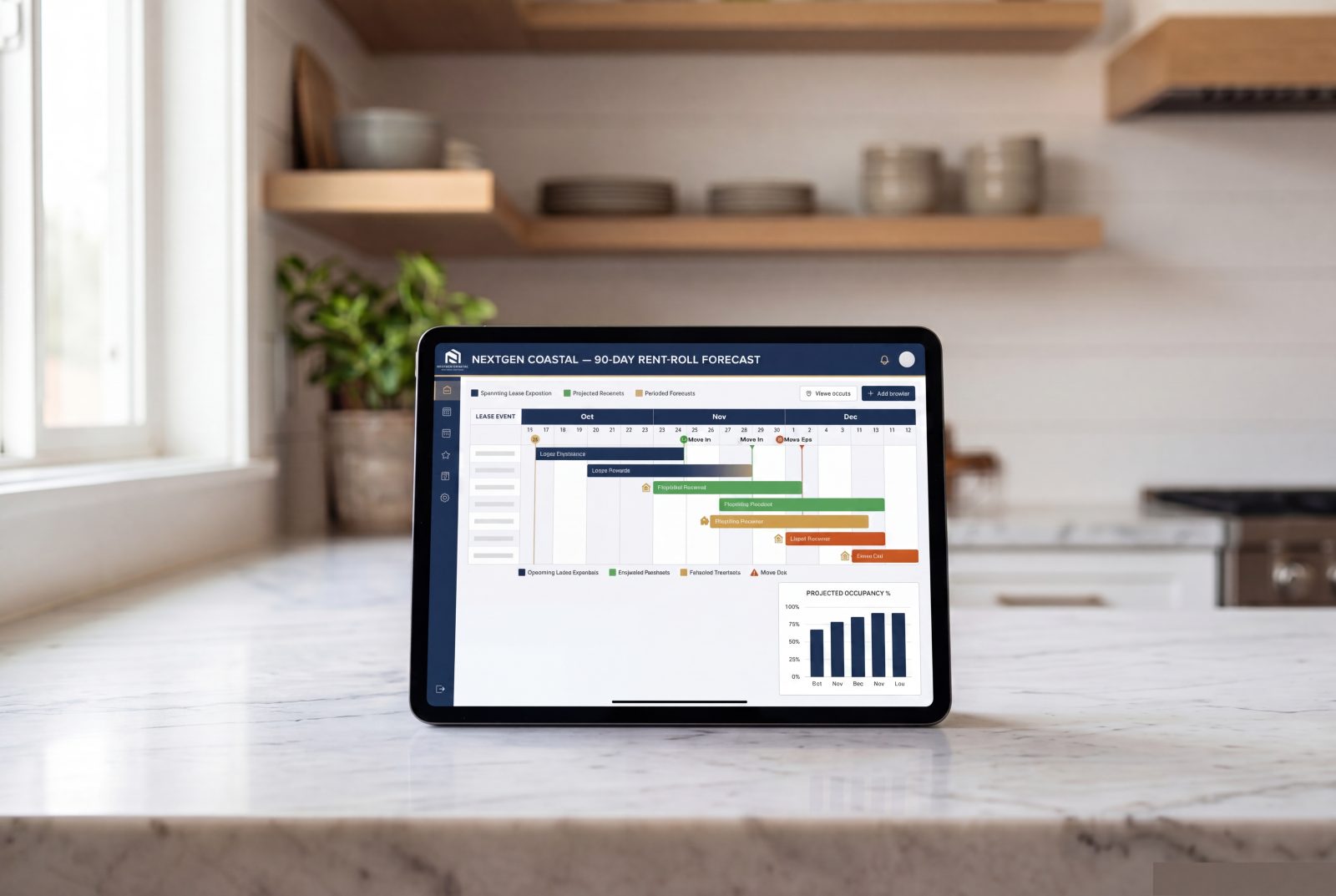
A forward rent-roll model accounting for lease ends, market lift since signing, AB 1482 cap math, and seasonal absorption. You see vacancy risk three months out, not the morning you get the move-out notice.
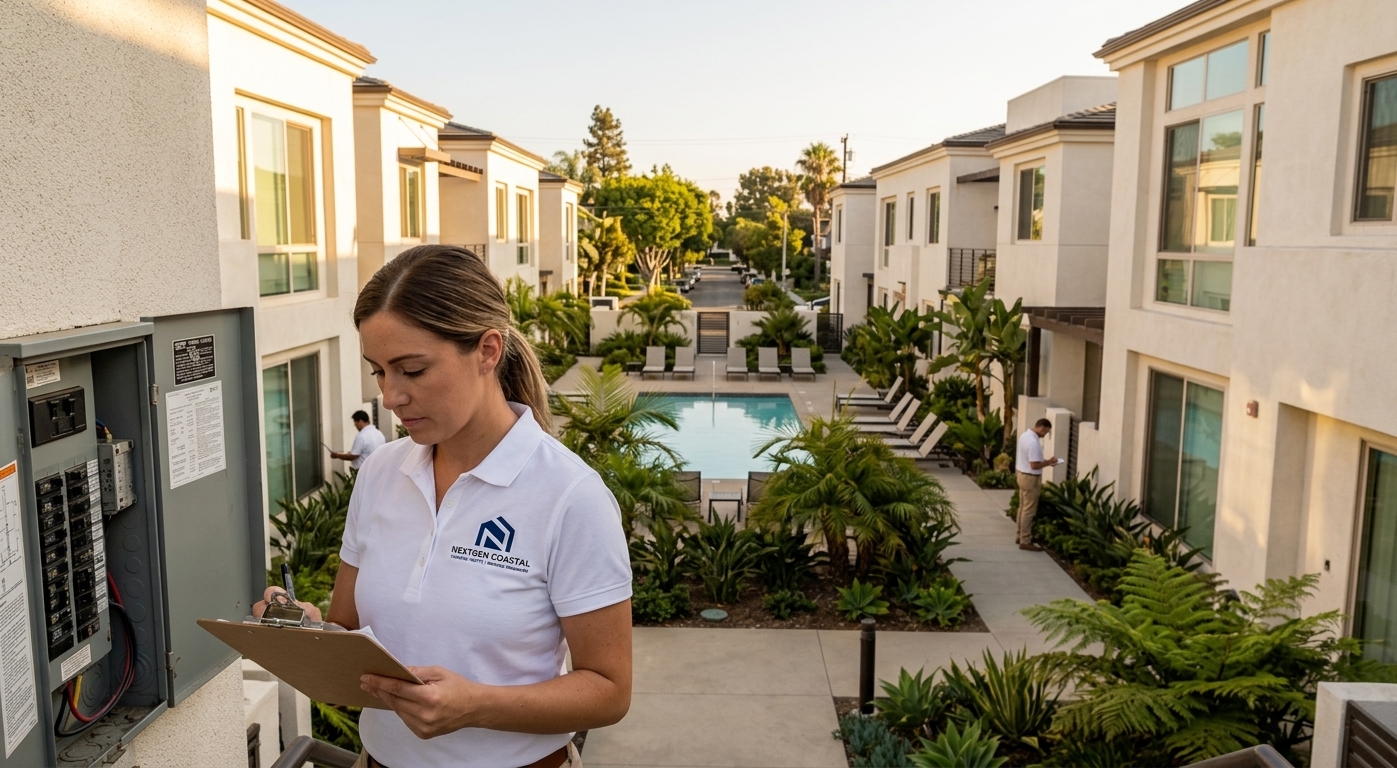
Real portfolio, real numbers
, A. Pham, owner of an 18-unit Costa Mesa garden-style building. Switched from a 9% manager in Q2 last year. Vacancy fell from 7.2% to 2.8%, and average days-on-market for re-lets dropped from 24 to 9.
Side-By-Side
| Charge | NextGen Coastal | Typical Multifamily Manager1 |
|---|---|---|
| Monthly management % | 5.9% | 8–10% |
| Per-unit leasing fee | $02 | 50% of one month / unit |
| Renewal fees per unit | $0 | $150–$300 each |
| Maintenance markup | 0% | 10–20% per invoice |
| Setup / onboarding | $0 | $500–$2,000 |
| Owner draw frequency | 1-2 days after collection | Monthly, 10–14 day hold |
| Rent re-pricing | Weekly per-unit | Once per lease |
| CA rent-control compliance | Automated & documented | Manual, owner liable |
| Worked example: 12-unit building, $2,800/mo avg rent1 | ||
| Management fee savings | $24,600+/yr | $0 saved |
| Rent lift (RentVelocity™)4 | ~$6,250/yr | Market rate only |
| Expense reduction (OpExEdge™)5 | ~$18,100/yr | None |
| Total annual advantage3 | ~$49,000+/yr | - |
Pricing
Larger portfolios (50+ units) get custom pricing. Talk to us →
Powered by AI
Multi-unit pricing isn't one rent, it's a ladder across unit types and exposures. RentVelocity™ re-prices each unit type weekly against same-submarket comparable closed leases, then staggers asking rents so identical 2-beds never list the same week. Owners see an average 6.2% rent lift4 at re-let across the building.
One unit vacant at $2,800/mo on a 12-unit building costs $33,600 a year. VacancyVaporizer™ drives our 3.1% portfolio vacancy by re-listing 45 days before move-out, running a 24/7 chatbot that books tours nights and weekends, and triggering renewal offers before move-out notices land.
One problem tenant in a multi-unit building disrupts every other resident and puts your California just-cause compliance at risk. EvictionPrediction™ catches risk at application: payment history, bank-statement velocity, multi-state eviction records, and income-stability signals a standard credit pull ignores. The problem never moves in.
Multifamily maintenance is shared, one elevator, one boiler, one roof. PropertyGuardian™ triages every resident request with photo/video, dispatches the right vendor against your spending limit, and tracks shared-system intervals (HVAC, fire-life-safety, pool, elevator) so contracts never lapse and inspections never get missed.
Buildings have recurring contracts, landscaping, pest, pool, elevator, fire alarm, trash. OpExEdge™ benchmarks every line item against our 650++ unit portfolio, kills the 10–20% maintenance markup, and flags warranty-covered repairs. Owners see 15% lower operating expenses5.
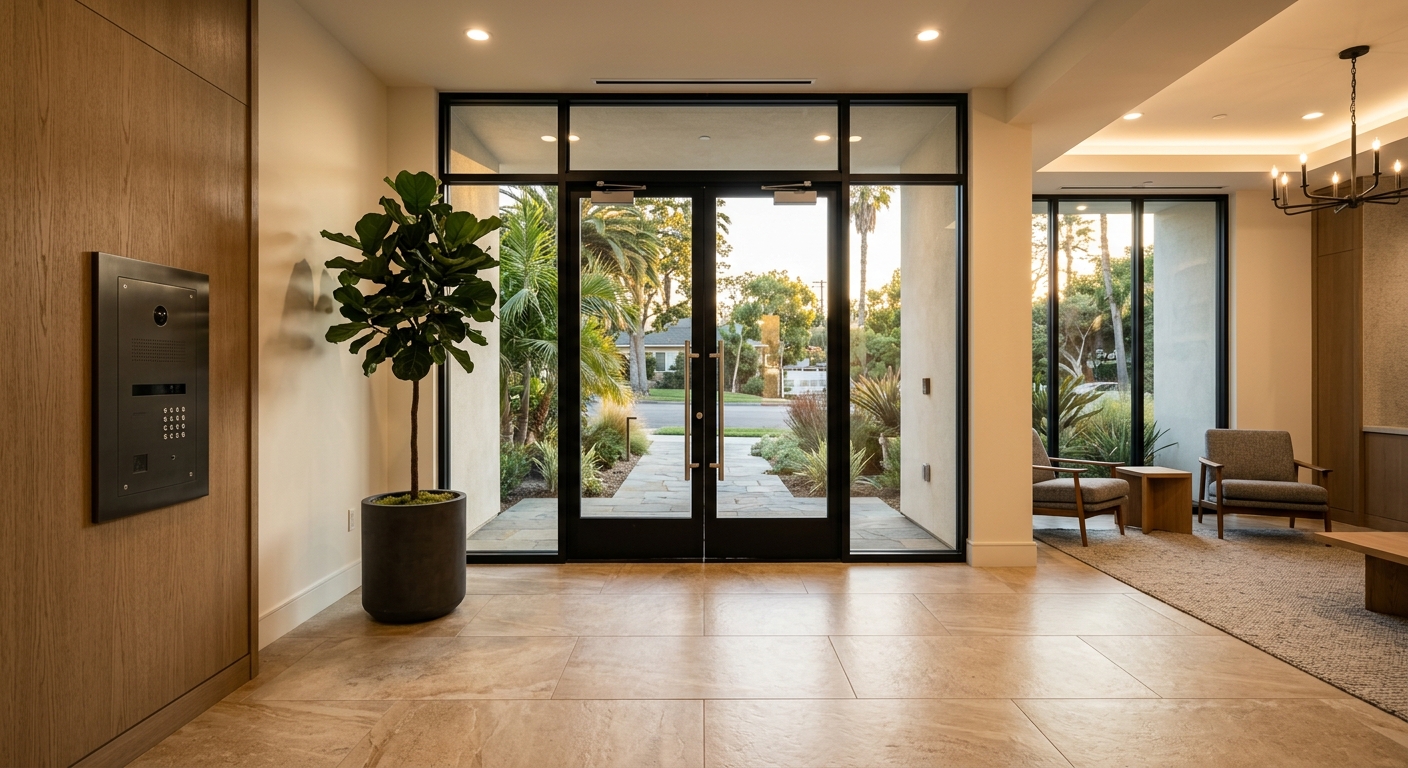
The Building Beyond the Units
Hallways, laundry, rooftop, mail, the spaces tenants pass through every day are the ones that signal "this owner cares" or "this owner cuts corners." We don't cut corners.






Common Questions
Duplex up to 50 units. Most of our portfolio is in the 4–24 unit "small multifamily" range that's too big to self-manage but historically too small for institutional firms to take seriously. Our software stack scales identically across portfolio sizes, a 6-unit owner gets the same financial reporting and vendor coordination a 200-unit owner would.
Three levers. First, we re-list units 45 days before the existing lease ends (legacy managers wait until move-out, losing 3+ weeks of rent). Second, RentVelocity™ adjusts asking price weekly so the unit stays at market without sitting. Third, our 24/7 AI chatbot books tours when prospects are actually shopping (evenings + weekends), not when our office is open. Result: average vacancy across our coastal multifamily portfolio is 3.1% vs. the OC/SD multifamily market average of 5.4%.
All coordinated through PropertyGuardian™ on a recurring schedule with vetted vendors at no markup. You see every invoice with the actual vendor receipt. Common area utilities are paid from a building operating account we set up under your name, funds always belong to you, we just disburse on your behalf with full audit trail.
Yes. California is a source-of-income protected state, and we screen voucher applicants on the same financial criteria as cash-paying applicants. We handle HUD inspections, HAP contracts, and the additional documentation. For owners with mixed-income buildings, we can also help with LIHTC compliance reporting where applicable.
Monthly owner statement with rent roll, vacancy report, expense ledger, NOI, and YTD comparison. Quarterly portfolio review with a recommended rent strategy per unit. Year-end 1099s, IRS Schedule E export, and CapEx summary. All available in the owner portal in real time, plus emailed PDF on the 5th of every month.
Same five-layer process as any unit (credit, criminal, eviction history, employment + 3x income, prior landlord). For rent-controlled buildings, we ensure all rent increases comply with the local ordinance (AB 1482, Costa-Hawkins exempt buildings, or city-specific caps in places like LA, Beverly Hills, and Santa Monica) and we maintain the documentation needed to defend any future challenge.
No. The percentage covers all leasing across all units, first lease, every renewal, every re-let. Most legacy multifamily managers charge half a month's rent per unit per leasing event. On a 12-unit building with average 25% turnover, that's 6 leasing fees a year on top of the management fee. We don't do that.
Owner draws are sent via ACH on the 3rd–4th of every month, typically 1-2 days after rent collection clears. For larger portfolios with reserve requirements, we can configure mid-month draws or hold a defined operating reserve before disbursing. You set the rules.
We don't pay your insurance or property taxes from operating accounts unless you specifically authorize it (most owners prefer to pay these directly from their entity). For agency-debt or commercial-lender requirements, we provide standardized monthly operating statements in the format Freddie/Fannie/CMBS servicers expect, and our reserve tracking matches lender escrow requirements.
Yes. Contact us or request one through the free analysis form and we'll send a redacted sample showing exactly what an owner sees each month, line-item rent roll, expenses, NOI, and bank reconciliation.
Free building-level rent analysis with comparable closed leases and a vacancy/NOI projection.
