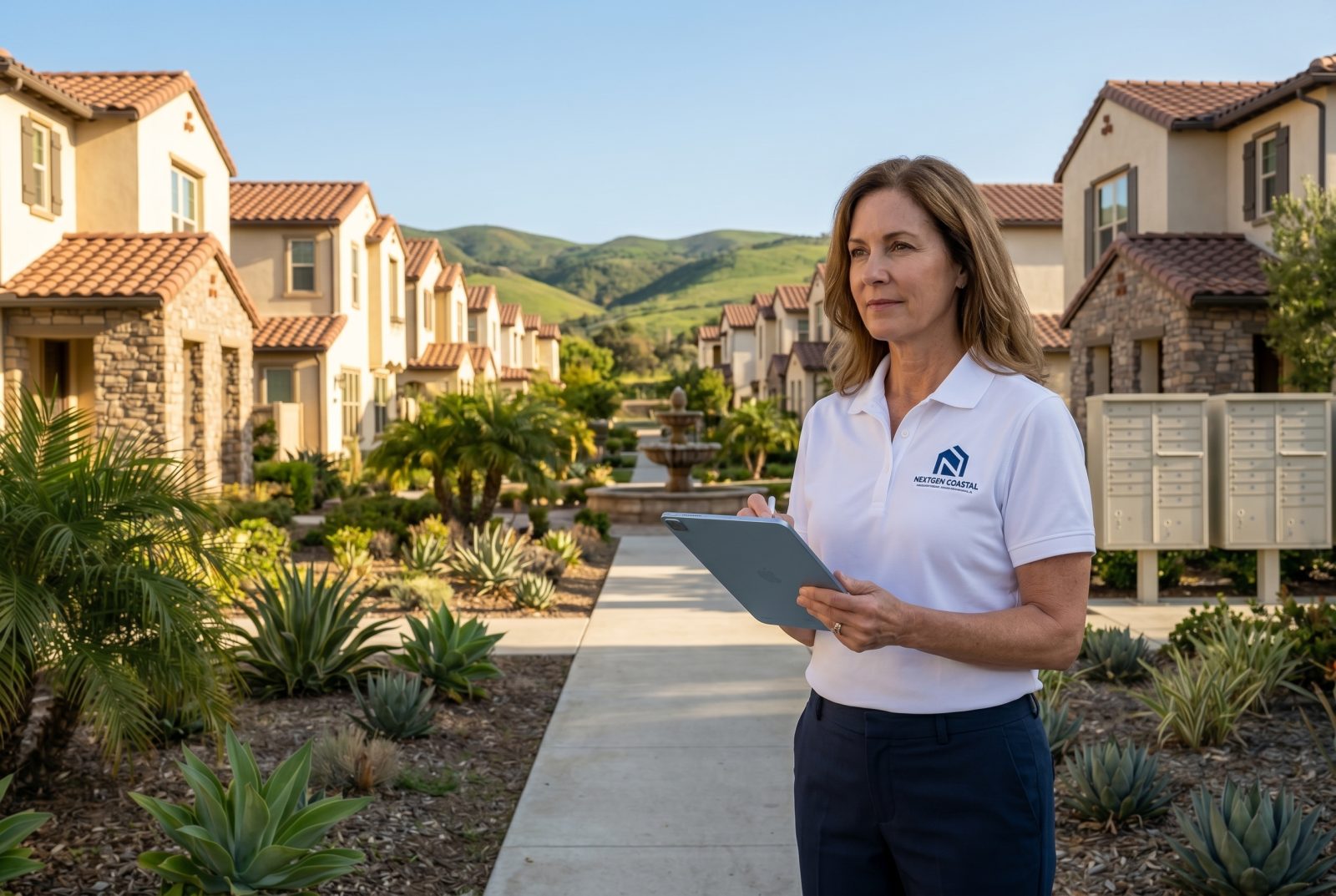
HOA & Condominium Management
Davis-Stirling compliant HOA management at 3.9% of gross receipts, roughly 60% less than the firms who staffed your last RFP. AI-driven vendor coordination, resident app, board portal, and reserve study tracking included.

What Boards Actually Get
Slow vendor responses. Insurance lapses caught at renewal. Landscaping complaints stacking up. Davis-Stirling deadlines missed and noticed by an angry owner. Monthly statements that nobody on the board can actually read. And the bill: 10–15% of every dollar collected.
HOAManager™ automates the coordination work, AR/AP, violation letters, ARC routing, meeting prep, owner correspondence, reserve tracking, so your community manager spends their time on what actually requires judgment: vendor relationships, board strategy, and walking the property. Same work done. Less overhead. The savings stay with the association.
See the savings math ↓Real Numbers, Real Associations
| HOA Profile | Annual Gross Receipts | Legacy (10%) | NGC (3.9%) | Annual Savings1 |
|---|---|---|---|---|
| 15-unit condo, $250 dues | $45,000 | $4,500 | $1,755 | $2,745 |
| 30-unit townhomes, $400 dues | $144,000 | $14,400 | $5,616 | $8,784 |
| 60-unit garden community, $500 dues | $360,000 | $36,000 | $14,040 | $21,960 |
| 120-unit master-planned, $600 dues | $864,000 | $86,400 | $33,696 | $52,704 |
HOA-Specific Services

Auto-drafts every statutory notice on the California clock, Open Meeting Act, IDR responses, election rules, fine hearings, lien filings. The compliance calendar surfaces deadlines 60 days before the board needs to vote, not 60 days after.
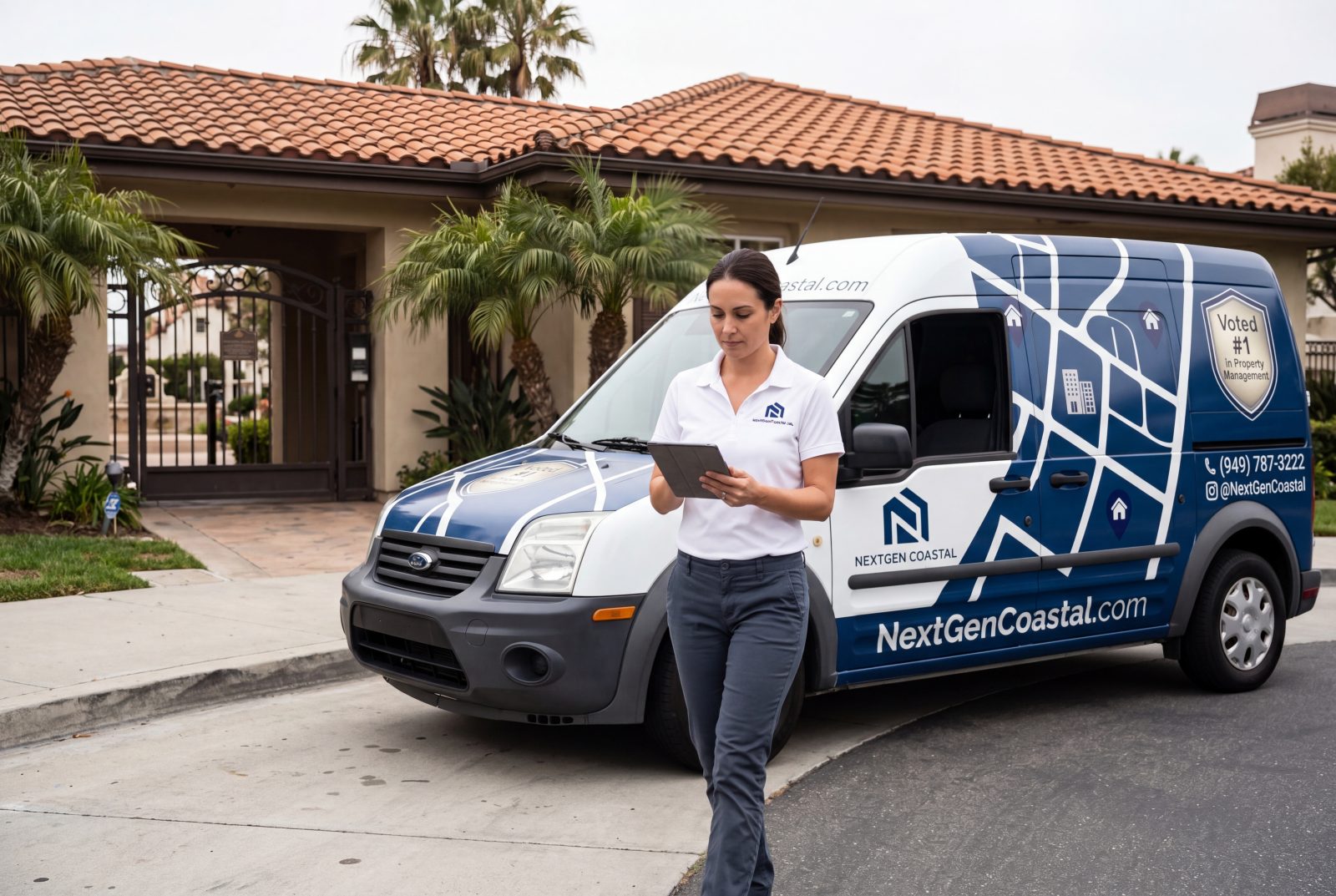
Boards see the property once a month at meeting; we see it every two weeks. Photo-documented common-area inspections, pool decks, breezeways, signage, irrigation, exterior paint, with vendor work orders attached to each issue. Not a drive-by.
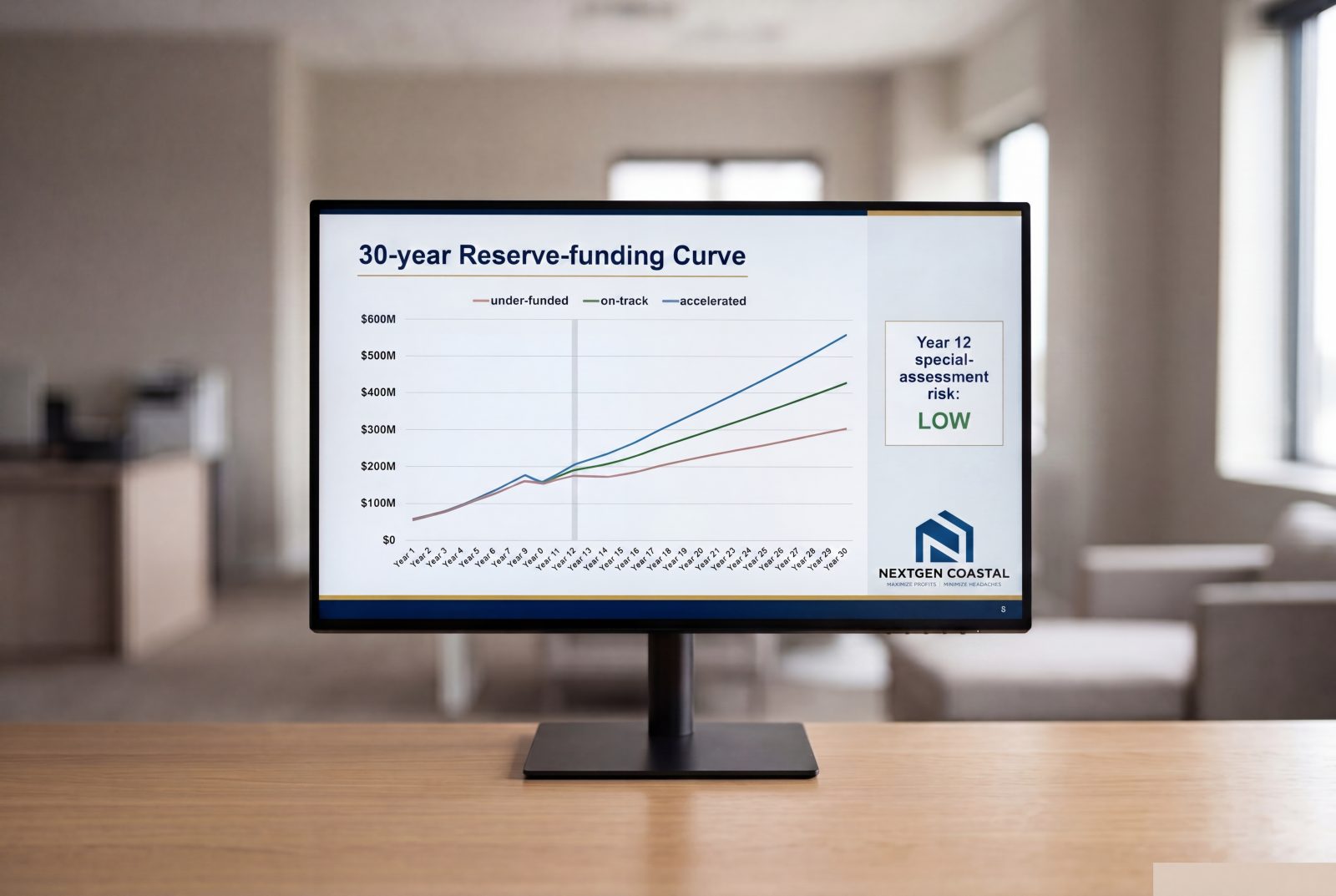
Most reserve studies show the next 5 years. We project 30. Boards see whether a $12/door increase today avoids a $4,200 special assessment in year 12, and which CapEx item is about to come off its useful-life curve.
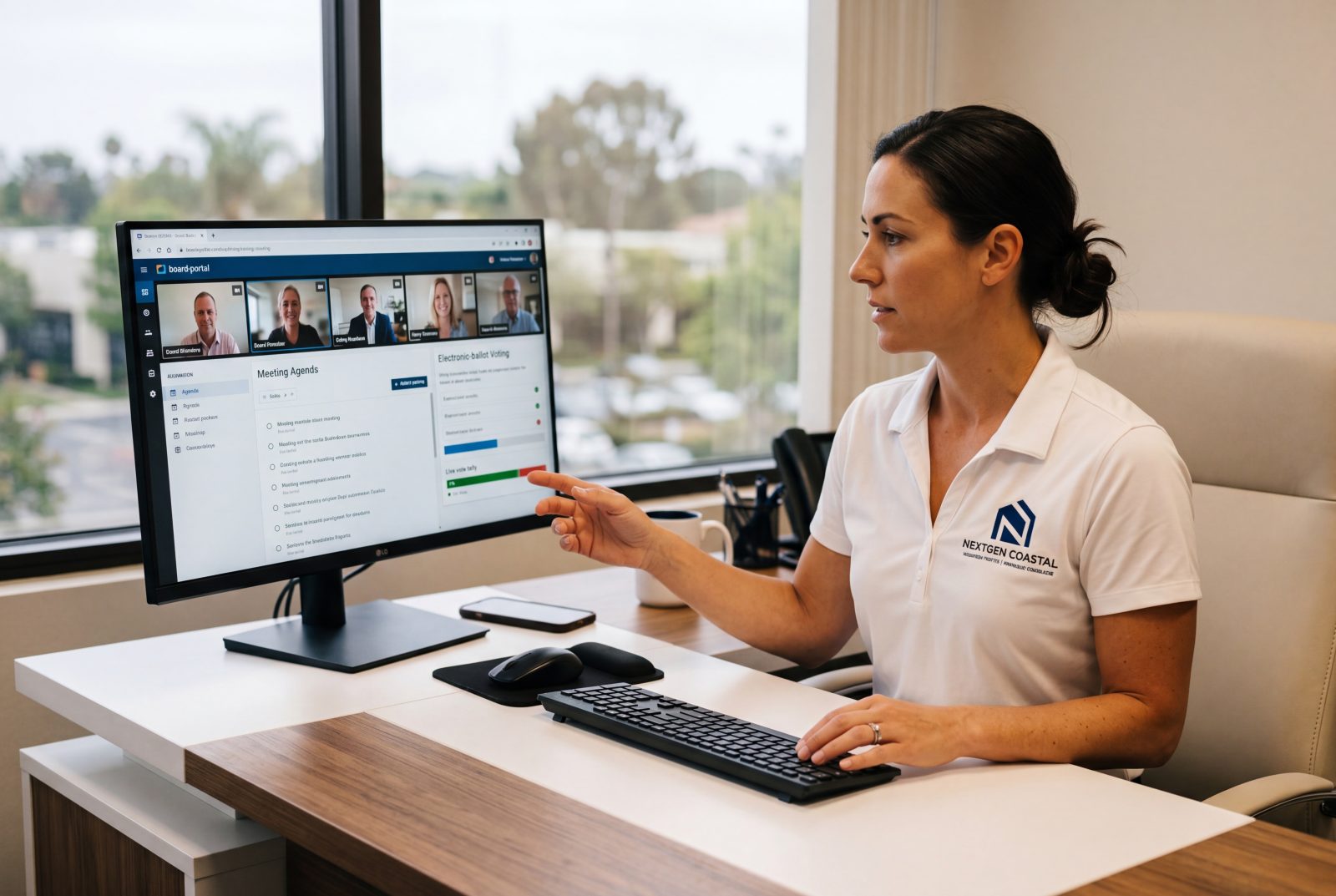
Online meetings with video, real-time financials, RFP-style vendor bidding, and electronic ballot voting compliant with California Corporations Code §7613. Treasurer reviews bank balances live; secretary approves minutes from a coffee shop.
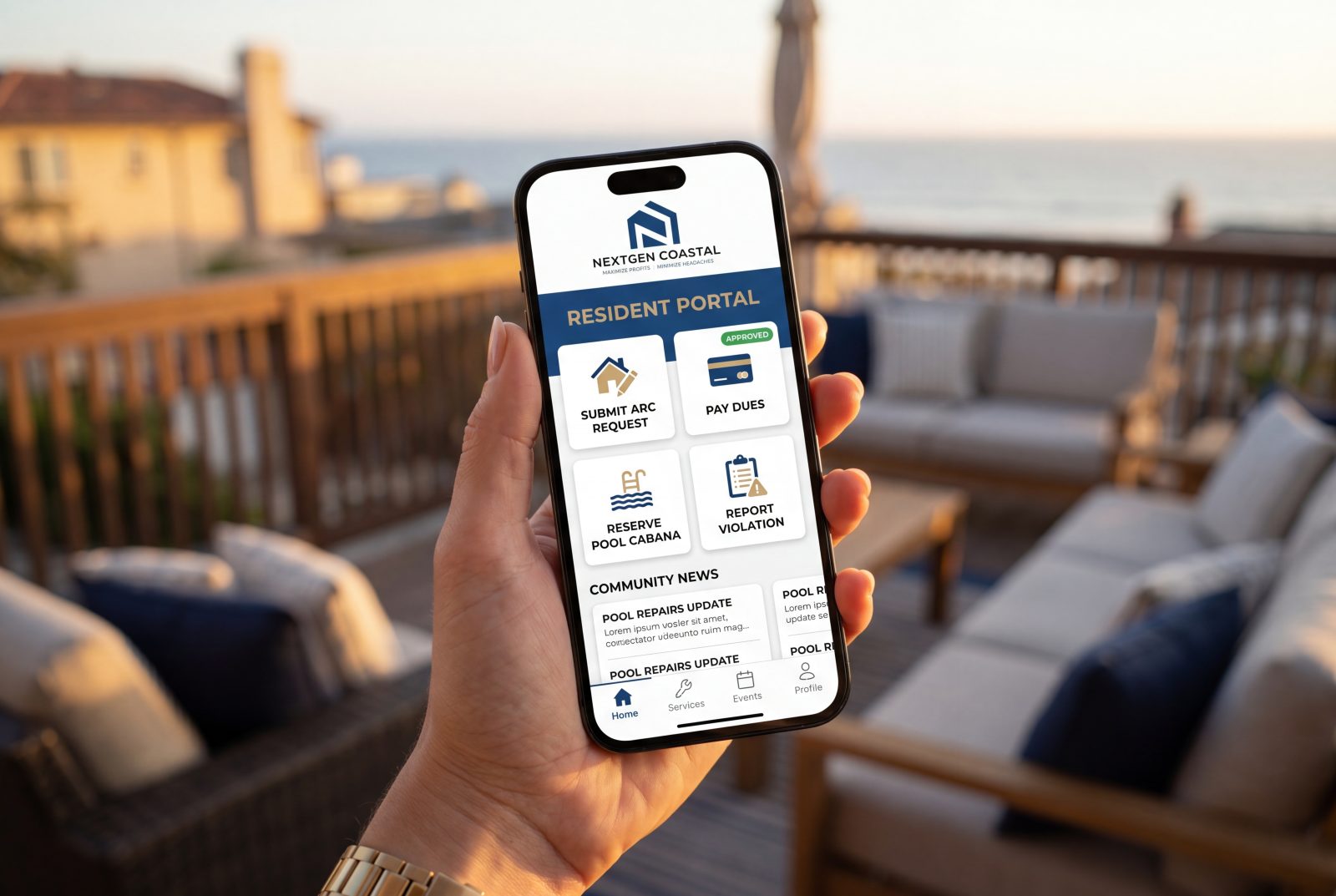
ARC submissions, dues payment, violation appeals, amenity reservations, community calendar. The board stops fielding the seventh "when is the pool reopening?" call this week. Inbound to community manager drops ~75%.
From a board treasurer
, M. Rivera, treasurer of a 42-unit Dana Point oceanfront condo association. Switched from a national HOA management firm in March 2024.
What "Well-Managed" Looks Like
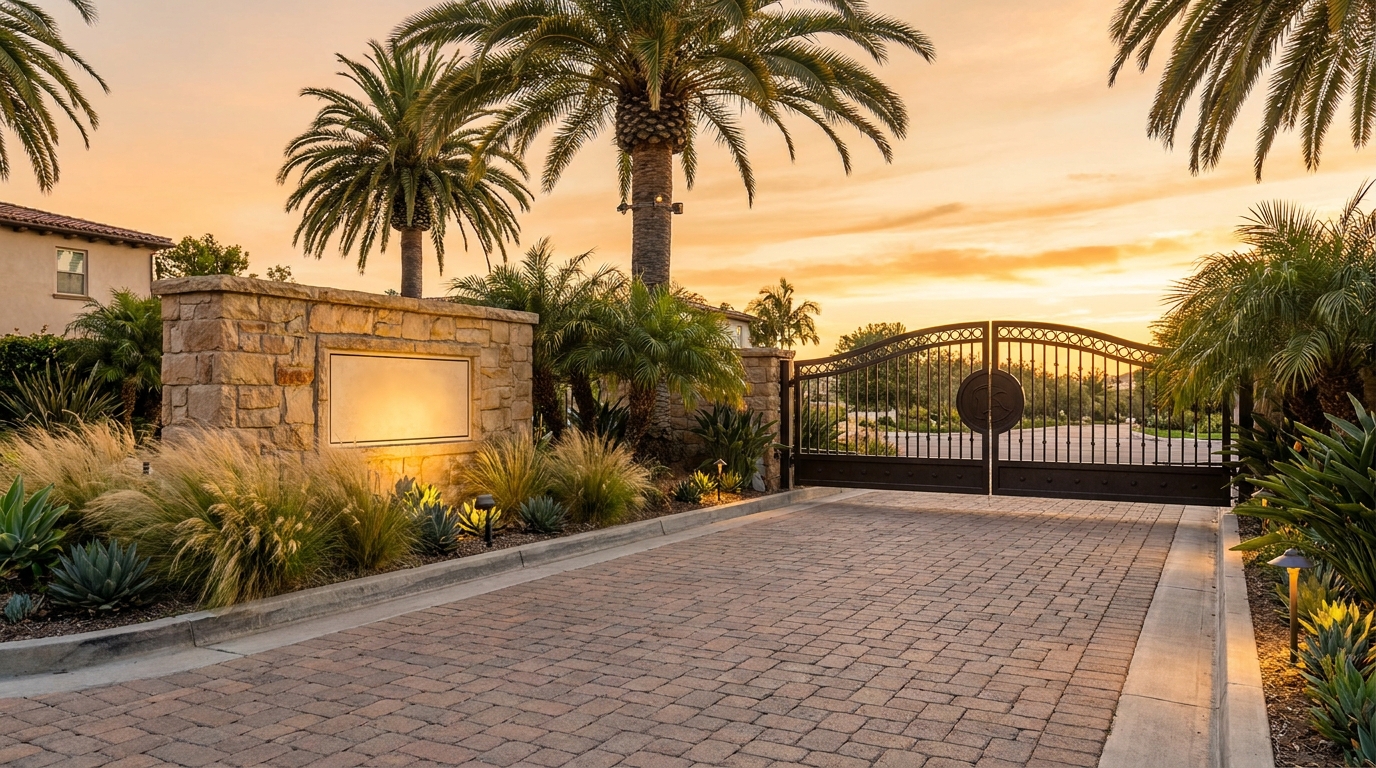
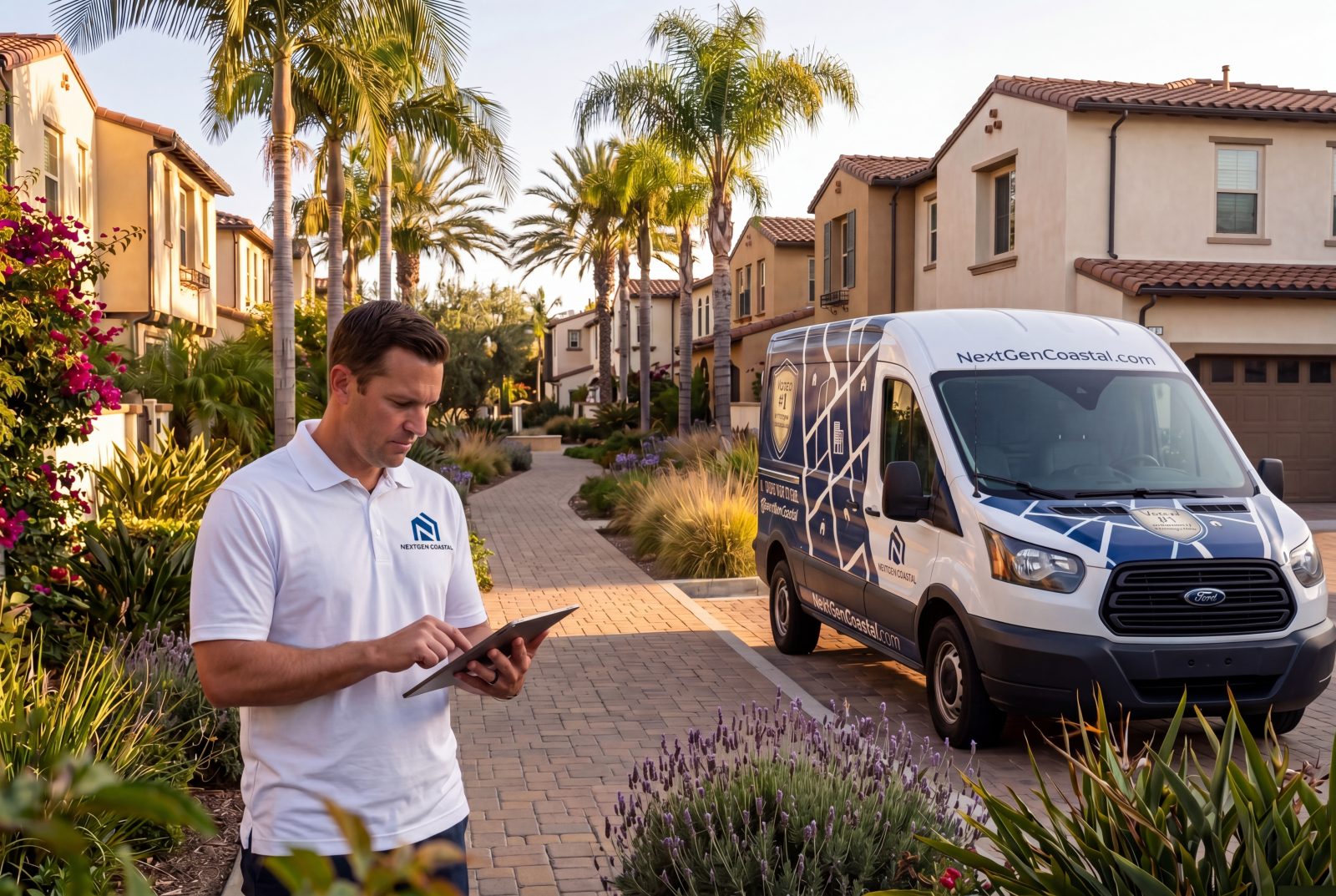
Common areas, landscaping, amenities, mailrooms, the visible signal that ownership pays attention to detail. None of these are stock photos.



Board Questions, Answered
8 units up to 400 units. Most of our HOA portfolio is in the 20–120 unit range, condominium associations, townhome communities, planned developments, and small master-planned subdivisions. We do not manage high-rise full-amenity towers (>500 units) where on-site staff is required, but we partner with on-site managers in those cases.
Two reasons. First, our HOAManager™ platform automates 80% of what legacy firms staff with humans: AR/AP, vendor dispatch, violation tracking, ARC submissions, owner correspondence, meeting minutes distribution, and reserve study tracking. Second, we don't charge "extras" that fatten legacy firm revenue: copies, postage, special meeting prep, transfer disclosures, and resale certificates are all included.
Yes, comprehensively. Annual policy notice, annual budget report, year-end financial summary, reserve disclosure summary, insurance summary, election rules, and assessment collection policy are all generated, distributed, and tracked automatically on the statutory schedule. Our compliance calendar surfaces every CA Civil Code §5300/§5310 deadline 60 days in advance for board review.
We coordinate the reserve study with a qualified third-party reserve specialist (you choose, or we recommend three vetted options). Required every 3 years per Civil Code §5550, with a site visit at least every 3 years. We then track funded vs. unfunded reserve % monthly and alert the board if the funding ratio drops below your stated target.
Our delinquency workflow follows the statutory pre-lien timeline: 30 days late = late notice + reminder, 60 days = pre-lien letter, 90 days = lien recorded with board approval, 180 days = referral to your association attorney for foreclosure or small claims. All steps documented for audit. Average delinquency rate across our HOA portfolio: 1.8% vs. industry average of 3.5%.
We prepare the agenda, post 4-day open-meeting notice per Civil Code §4920, attend (in-person or via Zoom), record minutes in real time, and distribute the draft minutes to the board within 72 hours for approval. Open-session minutes are then posted to the resident portal automatically. Executive session minutes are kept confidential per §4935.
Owners submit ARC requests through the resident app with photos, plans, and contractor info. The submission auto-routes to the architectural committee, who can approve, request more info, or deny, all from their phones. Standard 60-day response window enforced per the CC&Rs, with an automatic deemed-approval safeguard that alerts the board at day 50 if no decision was made.
For HOAs in Orange, LA, and San Diego coastal markets, yes, your dedicated community manager attends regular monthly or quarterly meetings in person. Special meetings and committee meetings are typically Zoom unless requested. For HOAs in Ventura/Santa Barbara, in-person quarterly + Zoom monthly is standard, but we travel for any meeting on request.
They stay in accounts titled to your HOA at FDIC-insured banks of the board's choice (we recommend Pacific Premier or US Bank for ease of integration, but the board decides). We have signing authority only as authorized by the board, never custody. You can require dual signatures over any threshold you set. Monthly bank statements emailed to the treasurer plus full read-only access in the portal.
Most CC&Rs and management agreements allow termination with 30–90 day notice. We handle the transition: records request, vendor introductions, bank account transfers, owner notification, and a 60-day parallel run if needed to avoid any service gap. No fees during transition, we don't charge until we're actually managing.
Send us your current management agreement, last reserve study, and a recent budget. We'll return a side-by-side fee comparison and a transition plan within 5 business days.
