Permit Guide · Updated May 2026
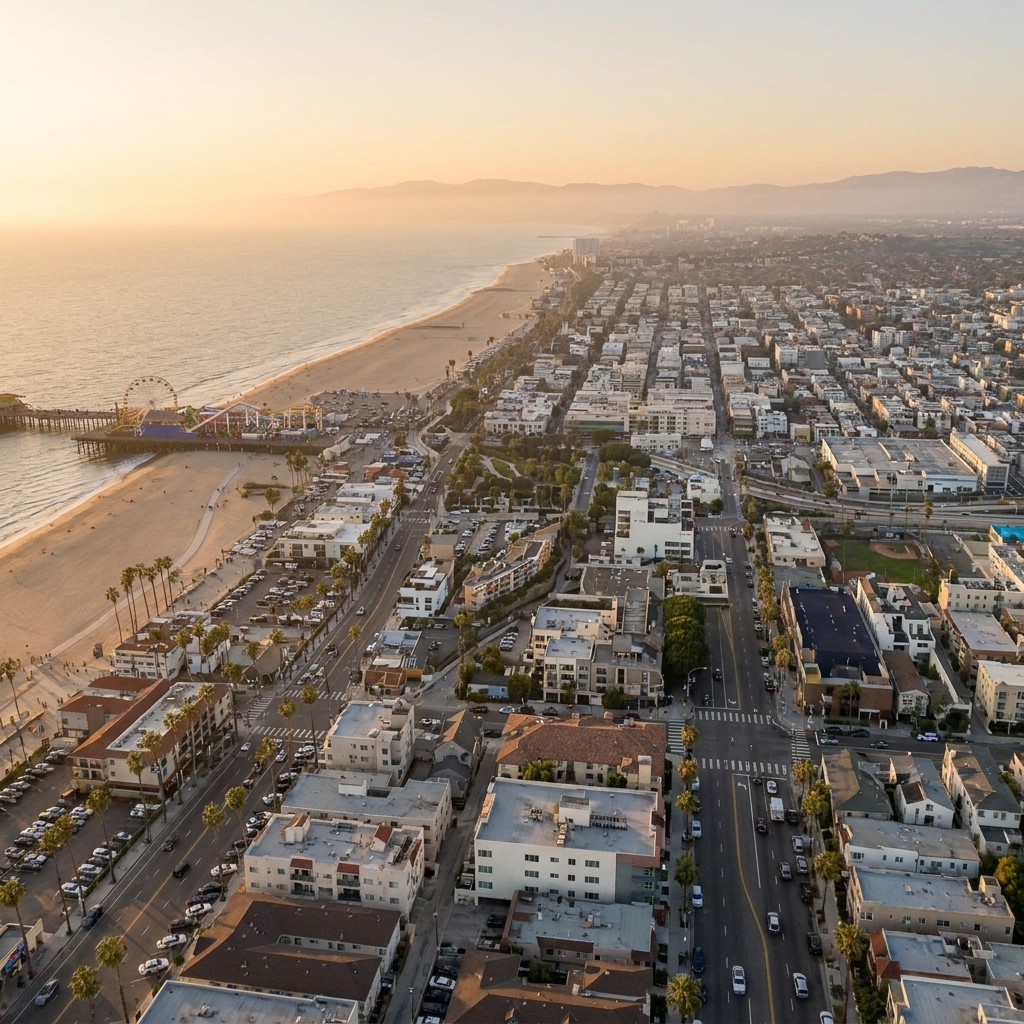
Santa Monica is not a viable investment-property STR market, but for owner-occupied home-sharing, the rules are clear and the nightly rates are strong. Here's what you need to know.
Key regulatory facts for STR operators. Last verified May 2026.
| Rule | Detail |
|---|---|
| Transient Occupancy Tax | 14%, among the highest in Southern California |
| Investment Property STRs | Prohibited. Primary residence only. |
| Annual Night Cap (whole home) | 120 nights per calendar year for whole-home STR |
| Room-Only Rental | Allowed while owner is present, no night cap, registration still required |
| Minimum Stay | No city minimum stay requirement |
| Platform Enforcement | Airbnb data-sharing agreement with city, unregistered listings are removed |
| Rate Range (compliant home-sharing) | $300–$800+/night for prime Santa Monica locations |
Santa Monica's rules are clear, but the enforcement is unusually effective. These are the most common compliance failures.
01. Trying to operate an investment property as an STR
This is the fundamental mistake in Santa Monica, and it's worth stating plainly: if you are not the primary resident of the property, you cannot legally operate it as a whole-home short-term rental. Period. The city's ordinance is unambiguous, enforcement is active, and the Airbnb data-sharing agreement means that non-compliant listings often don't survive long enough to generate meaningful revenue before they're deactivated. Investors who purchase Santa Monica properties specifically for STR income and are not prepared to live there are buying into a market that doesn't exist for them. Santa Monica is a home-sharing city, not an investment STR city.
02. Exceeding the 120-night cap without tracking nights
Compliant home-sharing operators who manage their own listings sometimes lose track of their night count, particularly if they use multiple platforms or mix platform bookings with direct reservations. The 120-night cap for whole-home STR is a hard limit, once you've hit it for the calendar year, any additional whole-home bookings are in violation regardless of how well-managed the operation is otherwise. A simple spreadsheet tracking every confirmed booking night is sufficient; the risk of not tracking is a compliance violation that can result in registration revocation.
03. Listing before registering and getting removed by Airbnb
Airbnb's data-sharing agreement with Santa Monica isn't passive, the platform actively cross-references listings against the city's registry of registered vacation rental operators. Operators who list first and plan to deal with registration later find their listings deactivated before they've received a single booking, often without a clear warning. The registration process is not onerous for a compliant primary-residence operator; it just has to happen first. Register with the city, receive your registration number, and include it in your listing from the moment it goes live.
For primary residents only. Complete these steps before accepting any bookings.
Confirm that the property you intend to operate is your legal primary residence, where you are registered to vote, receive mail, and pay state income tax. The city requires documentation of primary residency as part of the registration process. If the property is not your primary residence, whole-home STR is not available to you in Santa Monica.
Submit your registration application through the City of Santa Monica's Planning and Community Development Department, along with your business license application. Provide proof of primary residency and property documentation. Your registration number is what Airbnb will use to verify compliance.
Register for Transient Occupancy Tax with the city. At 14%, this is the highest TOT rate in the region. Airbnb collects and remits for platform bookings; direct bookings require manual monthly remittance. Set up a tracking system for your night count and your TOT obligations simultaneously.
Add your registration number to your listing before going live, Airbnb will require it. Set up a tracking system for whole-home nights booked against your 120-night annual cap. Price your permitted nights competitively; with only 120 nights of whole-home availability per year, each night's rate matters more than in uncapped markets.
Cost estimator
Santa Monica levies 14% TOT on gross booking revenue. Enter your expected annual gross below to see the full cost breakdown alongside NextGen Coastal's 18% all-in management fee.
~$250/yr home-sharing registration
TOT is collected from guests, not an owner expense. Cleaning billed at vendor cost to guests and is excluded here.
| TOT (14%), paid by guests | - |
| Annual permit fee | - |
| Total city obligations | - |
| NextGen Coastal fee (18%) | - |
| Net to owner (est.) | - |
Net to owner = gross revenue minus NGC management fee and annual permit. Before cleaning costs.
Last verified May 2026. Regulations change, confirm current requirements directly with the City of Santa Monica before operating.
If you're a compliant Santa Monica home-sharing operator, we can help you manage your listing, track your 120-night cap, handle TOT remittance, and optimize your pricing, all for 18% of gross revenue.
